- Startinev
- Archive
- Page 2
Archive

The Role of Education in Fostering Entrepreneurship Among African Youth
Africa’s youth bulge presents both a vast opportunity and a formidable challenge. Young Africans (ages 15–24) account for over 20% of the continent’s population, and more than half express a desire to start their own ventures—rates higher than any other world region. Yet without structured support, many of these aspiring entrepreneurs lack the skills, networks, and confidence needed to launch and sustain businesses. Robust education systems that integrate entrepreneurship can change this narrative by equipping students with real-world problem-solving abilities, financial literacy, and the resilience to navigate uncertainty. In this blog, we’ll explore how education fuels entrepreneurial mindsets among African youth, examine global and local best practices, highlight actionable opportunities for schools and insights for students, and showcase how Startinev’s Innovation Arm is empowering high-schoolers through the Solve X program


The Importance of Mentorship in Scaling African Startups
Mentorship isn’t just nice to have—it’s the pivotal force that transforms African startups from hopeful ideas into scalable, sustainable businesses. By pairing eager founders with seasoned advisors, mentorship accelerates learning, opens doors to critical networks, and cultivates the resilience needed to navigate Africa’s unique market challenges. As we introduce Startup Garage, discover how structured, end-to-end mentorship can bridge experience gaps, boost survival rates, and fuel the next generation of homegrown unicorns.

Beyond Fintech: Emerging Sectors in African Entrepreneurship
Africa’s innovation ecosystem is evolving at a remarkable pace. While fintech—the realm of mobile money, digital payments, and financial inclusion—has captured much of the spotlight, new sectors are rapidly emerging as engines of change. Agritech, healthtech, and edtech are among the industries where startups are transforming age-old challenges into innovative opportunities. Today, we’ll explore these emerging sectors, delve into the opportunities they present, and discuss how they are poised to contribute to a sustainable and inclusive economic future.

From Informal to Formal: Unlocking the Potential of African SMEs
Across Africa, the informal sector is both a symbol of resilience and a source of inherent limitations. Many SMEs thrive by operating outside the strict confines of government regulation—they’re agile, locally rooted, and often born out of necessity. However, this informality brings significant challenges: limited access to finance, lack of legal protection, and restricted market expansion. These constraints frequently trap businesses in a cycle where growth is stunted, despite the immense entrepreneurial potential.

The Fundraising Trap: Why African Startups Keep Raising (And When to Stop)
African startups are raising capital at an unprecedented pace, but is continuous fundraising always the best strategy? While venture capital fuels rapid growth, it often comes with high expectations and pressure to scale fast. On the other hand, bootstrapping offers control and financial discipline but can slow down expansion. In this blog, we explore why African founders keep raising, the challenges unique to the ecosystem, and whether there’s a middle ground between sustainable growth and aggressive fundraising.

Overcoming Odds: How African Women Are Redefining the Entrepreneurship Landscape
African women are increasingly making their mark in the entrepreneurial world, overcoming significant challenges to drive economic growth and social change across the continent. Despite facing obstacles such as limited access to funding, cultural biases, and inadequate support networks, these women are transforming adversity into opportunity, reshaping industries, and inspiring future generations. According to the World Bank, women in developing economies face a staggering $300 billion annual finance deficit, a barrier that stifles many promising ventures (Reuters). These hurdles are compounded by societal expectations that traditionally restrict women's roles in business and innovation.

The Future of Work in Africa: Remote Work, Digital Nomads, and the Gig Economy
Remote work has exploded globally, and Africa is riding this wave. With internet penetration steadily increasing – in some African markets, mobile connectivity now exceeds 90% (GSMA) – more professionals are able to work for global companies from their own homes. Harvard Business Review highlights that remote work can boost productivity by as much as 13%, while reducing overhead costs and enabling companies to access diverse talent pools. This shift is not only broadening employment opportunities but also empowering African professionals to work without geographic constraints.

The Startup Killer: Building Solutions in Search of Problems.
In 2021, a promising African startup raised millions in funding. Their pitch was perfect, their team was solid, and investors were excited. Two years later, they were gone. What happened?They built a solution in search of a problem.This isn’t just their story — it’s the story of hundreds of African startups that shut down every year because they don’t fully understand the problem they are trying to solve. In a market where funding is tight and competition is fierce, entrepreneurs don’t have the luxury of guessing.

The Startup Hype vs. Actual Impact: Are We Glorifying Startups More Than Sustainable Businesses?
Africa’s startup scene is booming. Every year, we see more funding, more ambitious founders, and more companies promising to be the next big thing. But here’s the hard truth: funding alone doesn’t build a business—sustainability does.

Beyond the Business Model: The Role of Cultural Context in Entrepreneurial Success
Entrepreneurs often look to scale their ideas across Africa, but without understanding the cultural nuances of each region, solutions can miss the mark. The same technology or business model may be perceived and used entirely differently depending on where you are—what works in one context may fail miserably in another.
AfCFTA & Startups: A 1.4 Billion-Person Market Up for Grabs?
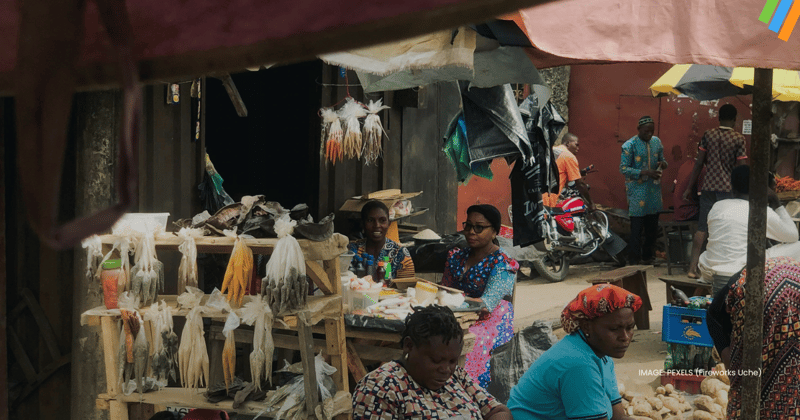
Africa is on the cusp of an economic transformation, and at the heart of this shift is the African Continental Free Trade Area (AfCFTA). With 54 countries and a combined market of over 1.4 billion people, Africa presents a vast landscape of opportunities for startups. However, despite the immense potential, scaling beyond home markets remains a significant hurdle. Today, we break down how AfCFTA is set to change that.

Africa’s Small Business Paradox: Too Many, Too Small, Too Stuck?
Africa is one of the most entrepreneurial continents in the world. Walk down any street in Lagos, Nairobi, or Accra, and you’ll see it—people selling, creating, and building. SMEs make up 95% of all businesses on the continent and contribute about 50% of GDP. Yet, despite this entrepreneurial energy, most businesses remain small, struggling to scale into larger, more impactful enterprises.